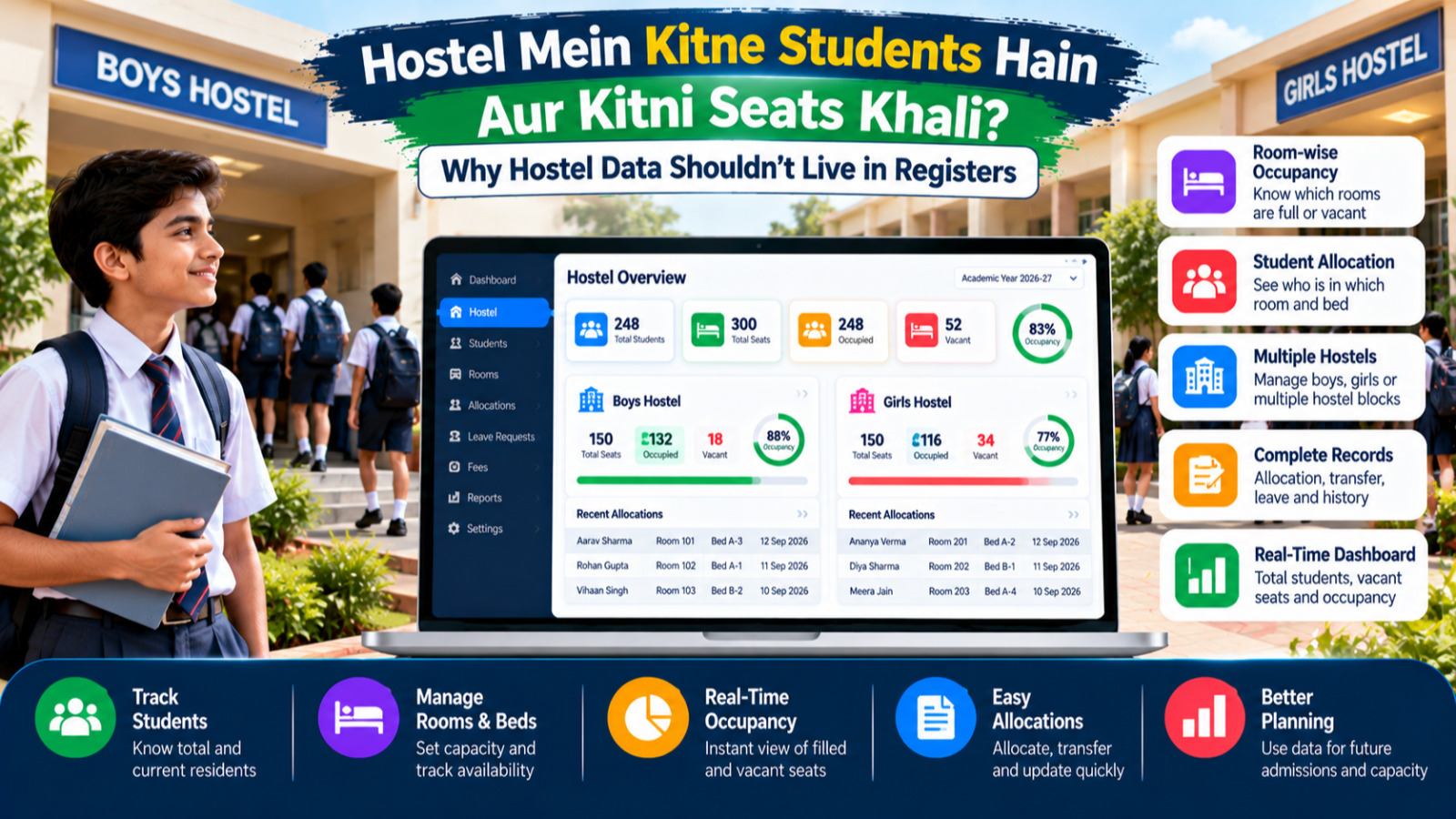

Why Hostel Data Shouldn't Live in Registers
School hostel manage karna sirf students ko rooms allot karne ka kaam nahi hai.
Management ko har time kuch basic questions ke answers pata hone chahiye:
Hostel mein total students kitne hain?
Total rooms kitne hain?
Total beds/seats kitni hain?
Kitni seats occupied hain?
Kitni vacant hain?
Kaunsa student kis room mein hai?
Kis room mein kitni capacity remaining hai?
Simple questions hain.
Lekin agar hostel ka complete data registers, notebooks aur multiple Excel sheets mein maintain ho raha hai, to in questions ka answer nikalne mein surprisingly zyada time lag sakta hai.
Aur problem sirf time ki nahi hai.
Manual hostel records se wrong allocation, outdated information, duplicate entries aur vacant capacity ka inaccurate picture bhi create ho sakta hai.
Isliye hostel data ko sirf register mein store karna enough nahi hai.
Hostel management ko real-time visibility ki zarurat hoti hai.
Hostel Capacity Aur Occupancy Ko Clearly Samajhna Zaroori Hai
Maan lijiye school hostel mein:
10 Rooms
4 Beds per Room
Total capacity:
40 Students
Ab current students:
34
To technically:
6 Seats Vacant
Lekin kya management ko instantly pata hai ki ye 6 seats exactly kahan available hain?
Maybe:
Room 1 → Full
Room 2 → Full
Room 3 → 2 Students
Room 4 → Full
Room 5 → 3 Students
Room 6 → 4 Students
...
Agar ye information manually maintain ho rahi hai, to vacancy calculate karna repeatedly difficult ho sakta hai.
Digital hostel system mein occupancy aur vacancy automatically calculate ki ja sakti hai, based on updated allocations.
1. “Vacant Seats” Aur “Available Room” Same Nahi Hote
Ye ek important distinction hai.
Suppose hostel mein:
Total Capacity = 100
Occupied = 92
Vacant = 8
Iska matlab automatically ye nahi hai ki ek complete room available hai.
Ho sakta hai:
-
Room 1 → 1 vacant bed
-
Room 2 → 2 vacant beds
-
Room 3 → 1 vacant bed
-
Room 5 → 2 vacant beds
-
Room 7 → 2 vacant beds
Yaani management ko sirf total vacancy nahi, room-level vacancy bhi dekhni chahiye.
2. Student Ka Room Allocation Clear Hona Chahiye
Hostel management ka basic question:
“Student kaha reh raha hai?”
Digital record mein information kuch is tarah organized ho sakti hai:
Student: Aarav Sharma
Hostel: Boys Hostel A
Room: 204
Bed: B-03
Allocation Date: 1 July 2026
Status: Active
Ab agar parent, warden ya management ko student accommodation information chahiye, to record quickly access kiya ja sakta hai.
3. Register Mein Ek Entry Change Karna Easy Lagta Hai, Lekin 500 Students Mein?
Ek student ka room change karna simple hai.
Lekin hostel mein hundreds of students hon aur:
-
New admissions
-
Room transfers
-
Students leaving hostel
-
Temporary movement
-
Bed changes
-
Hostel changes
regularly ho rahe hon, to records continuously change hote rahenge.
Manual register mein old information update karna easy nahi hota.
Kabhi-kabhi ek register update ho jata hai aur doosre record mein old room number reh jata hai.
Yahin se data inconsistency start hoti hai.
4. Hostel Allocation History Bhi Important Hai
Suppose student pehle Room 105 mein tha.
Baad mein Room 205 mein shift hua.
Management ko sirf current room nahi, kabhi-kabhi allocation history bhi useful ho sakti hai.
For example:
July: Room 105
September: Room 205
January: Room 301
Aisi history future queries aur hostel management review mein useful ho sakti hai.
5. Hostel Vacancy Management Admissions Ko Support Kar Sakta Hai
Admission enquiry ke time parent pooch sakta hai:
“Hostel available hai?”
Agar management ko exact vacancy pata nahi hai, to answer dene mein time lag sakta hai.
Better system mein:
Total Capacity
Occupied
Vacant
Available by Room
clearly visible ho sakta hai.
For example:
Boys Hostel
Capacity: 120
Occupied: 108
Vacant: 12
Girls Hostel
Capacity: 100
Occupied: 94
Vacant: 6
Ab admission team parent ko faster information de sakti hai.
6. Hostel Occupancy Percentage Management Ko Better Picture De Sakta Hai
Sirf vacant seats dekhna enough nahi hai.
Occupancy percentage bhi useful hai.
Example:
Capacity: 200
Occupied: 180
Occupancy: 90%
Ab management ko pata hai ki hostel almost full capacity par operate kar raha hai.
Agar occupancy continuously 95%+ ja rahi hai, to management future capacity planning ke baare mein soch sakta hai.
Agar occupancy 50% hai, to school ko understand karna chahiye ki available capacity underutilized kyon hai.
7. Room Capacity Aur Actual Occupancy Compare Karna Useful Hai
Suppose:
Room 101 → Capacity 4 → Occupied 4
Room 102 → Capacity 4 → Occupied 2
Room 103 → Capacity 4 → Occupied 1
Room 104 → Capacity 4 → Occupied 4
Management ko pata chal sakta hai ki capacity evenly utilized nahi ho rahi.
Agar room allocation rules allow karte hain, to future allocations ko more efficiently plan kiya ja sakta hai.
8. Hostel Management Sirf Students Aur Rooms Tak Limited Nahi Hai
Hostel ek operational environment hai.
Management ko potentially track karna padta hai:
-
Students
-
Rooms
-
Beds
-
Wardens
-
Room allocation
-
Hostel blocks
-
Capacity
-
Vacancies
-
Transfers
-
Check-in/check-out
-
Basic hostel records
Isliye hostel data ko school ke broader student management system ke saath connect karna useful ho sakta hai.
9. Student Leaves Hostel To Vacancy Update Honi Chahiye
Imagine kijiye ek student hostel leave kar deta hai.
Register mein exit entry ho gayi.
Lekin room allocation list update nahi hui.
Result:
Actual Vacancy = 1
System/Register Vacancy = 0
Ab next admission enquiry mein school unnecessarily bol sakta hai:
“No vacancy.”
Digital workflow mein student status update ke baad room occupancy automatically recalculate ki ja sakti hai, depending on system design.
10. New Student Aata Hai To Allocation Organized Hona Chahiye
New hostel student ke liye process simple ho sakta hai:
Student Select
↓
Hostel Select
↓
Room Select
↓
Available Bed
↓
Allocation Confirm
Ab system occupancy update kar sakta hai.
Example:
Before:
Room 205
3/4 Occupied
After allocation:
4/4 Occupied
Vacancy automatically change ho gayi.
11. “Full Room” Aur “Available Bed” Ka Confusion Avoid Karna Zaroori Hai
Manual systems mein kabhi-kabhi room ko simply:
Occupied
ya
Vacant
mark kar diya jata hai.
Lekin actual hostel mein partial occupancy common hai.
For example:
Room Capacity: 6
Occupied: 4
Available: 2
Isliye room status ko sirf Yes/No ki jagah actual occupancy ke saath maintain karna more useful hai.
12. Hostel Data Parents Ke Liye Bhi Important Hai
Parent naturally pooch sakta hai:
Child ka room number kya hai?
Hostel kaun sa hai?
Warden kaun hai?
Room capacity kya hai?
Student ka allocation active hai?
Agar school ke paas centralized information hai, to authorized staff parent queries ka answer quickly de sakta hai.
Better information means:
Less confusion + Better communication.
13. Hostel Data Aur Student Data Connected Hona Chahiye
Student ka academic life school mein hai.
Accommodation life hostel mein hai.
Lekin student same hai.
Isliye ideal structure ho sakta hai:
Student Profile
↓
Academic Information
↓
Attendance
↓
Fees
↓
Hostel Allocation
↓
Room/Bed
Is connected view se management ko student ki broader information samajhne mein help mil sakti hai.
14. Hostel Fees Ko Allocation Ke Saath Connect Karna Useful Ho Sakta Hai
Hostel use karne wale students ke liye hostel fees alag ho sakti hain.
Management ko pata hona chahiye:
Kaun hostel mein hai?
Kaunsi hostel category hai?
Hostel fee kitni hai?
Payment status kya hai?
Student hostel chhod chuka hai ya active hai?
Agar hostel allocation aur fee records connected hain, to billing aur occupancy management ke beech consistency maintain karna easier ho sakta hai.
15. Warden Ke Liye Daily Information Easily Available Honi Chahiye
Hostel warden ko unnecessary registers search nahi karne chahiye.
Unhe quickly dekhne ko mil sakta hai:
Total Residents
Room-wise Students
Vacant Beds
New Allocations
Students Checked Out
Room Transfers
Isse daily hostel operations more organized ho sakte hain.
16. Management Ko Hostel Dashboard Kya Dikha Sakta Hai?
Ek simple hostel dashboard par:
Boys Hostel
Capacity: 150
Occupied: 136
Vacant: 14
Occupancy: 90.7%
Girls Hostel
Capacity: 120
Occupied: 108
Vacant: 12
Occupancy: 90%
Ab management ko hostel status ka quick overview mil sakta hai.
Detailed view mein room-wise occupancy dekhi ja sakti hai.
17. Hostel Register Ko Completely Replace Karna Main Objective Nahi Hai
Digital system ka purpose sirf register ko computer mein convert karna nahi hai.
Real objective hai:
Better visibility + Better accuracy + Faster updates + Easier reporting
Register mein information stored hoti hai.
Digital system mein information ko:
Search
Filter
Update
Report
aur Analyze
karna easier ho sakta hai.
Yahi major difference hai.
18. S2DENTSHIVE Hostel Management Ko More Organized Bana Sakta Hai
S2DENTSHIVE school management ecosystem mein hostel information ko centralized way mein manage karne mein help karta hai.
School hostel-related information jaise:
-
Hostels
-
Rooms
-
Capacity
-
Student allocation
-
Occupied seats
-
Vacant seats
-
Occupancy percentage
ko structured digital records ke through manage kar sakta hai.
Iska objective simple hai:
Management ko har waqt pata rahe ki hostel mein capacity kya hai aur students kahan allocated hain.
19. School Owners Ko Apne Hostel System Se Ye Questions Puchne Chahiye
Agar aap hostel manage karte hain, to ye questions zaroor puchiye:
-
Total hostel capacity kitni hai?
-
Current occupancy kitni hai?
-
Vacant beds kitne hain?
-
Room-wise vacancy pata hai?
-
Kaunsa student kis room/bed mein allocated hai?
-
Room transfer history maintain hoti hai?
-
Student hostel leave karta hai to vacancy immediately update hoti hai?
-
Hostel fee aur allocation records connected hain?
-
Warden ko updated room list easily milti hai?
-
Management ek dashboard se complete hostel status dekh sakta hai?
Agar inmein se kaafi questions ka answer No hai, to hostel records ko digitalize karne ka strong case ho sakta hai.
Registers Se Real-Time Hostel Visibility Tak
Traditional approach:
Register → Entry → Manual Update → Manual Counting → Manual Report
Digital approach:
Student → Hostel → Room → Bed → Allocation → Occupancy → Dashboard
Difference simple hai.
Pehle management ko information find karni padti thi.
Better digital system mein management information ko see and use kar sakta hai.
Final Thought
Hostel mein ek empty bed sirf ek empty bed nahi hai.
It represents:
Available Capacity
Aur ek occupied bed represent karta hai:
Student + Room + Allocation + Operational Responsibility
Isliye hostel management ko sirf ye nahi puchna chahiye:
“Hostel mein kitne students hain?”
Better questions hain:
“Kitni capacity hai?”
“Kitni occupied hai?”
“Kitni vacant hai?”
“Vacant beds kis rooms mein hain?”
“Kaunsa student kahan allocated hai?”
“Latest allocation kab update hua?”
Jab ye information registers aur scattered Excel sheets mein divided hoti hai, to hostel management unnecessarily complicated ho sakta hai.
Lekin jab hostel data digitally organized hota hai, to school ko occupancy, vacancy aur student allocation ki clear visibility mil sakti hai.
Aakhir mein hostel management ka goal sirf rooms fill karna nahi hai.
Goal hai available space ko efficiently manage karna, students ki accommodation information accurate rakhna aur management ko real-time picture dena.
Because a hostel register tells you what was written — a digital system can help you understand what is happening now.
Comments (0)
Share your thoughts or ask a question about this article.
Leave a Comment